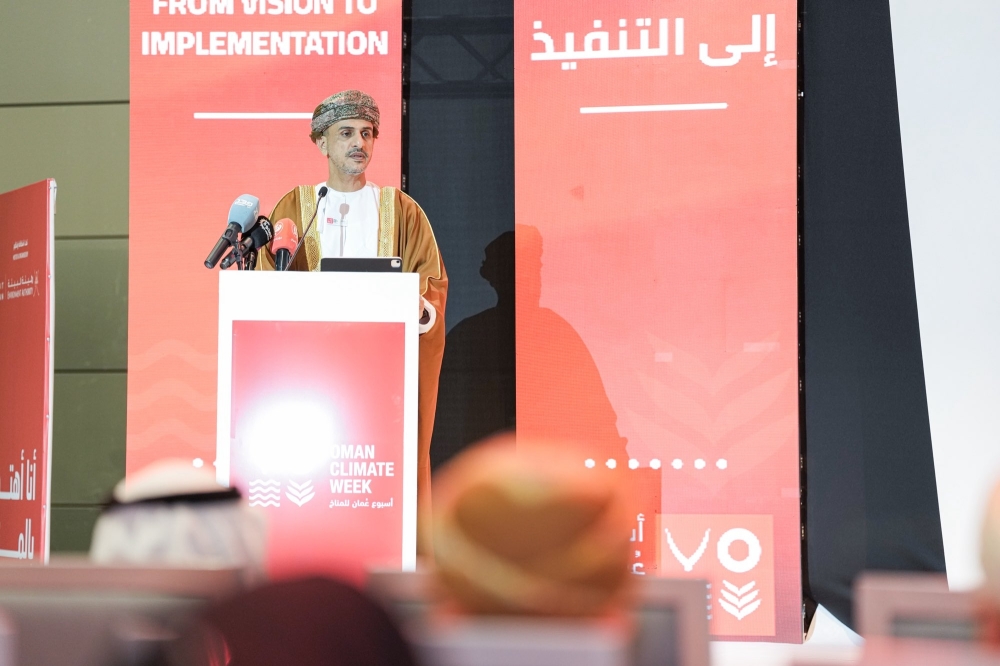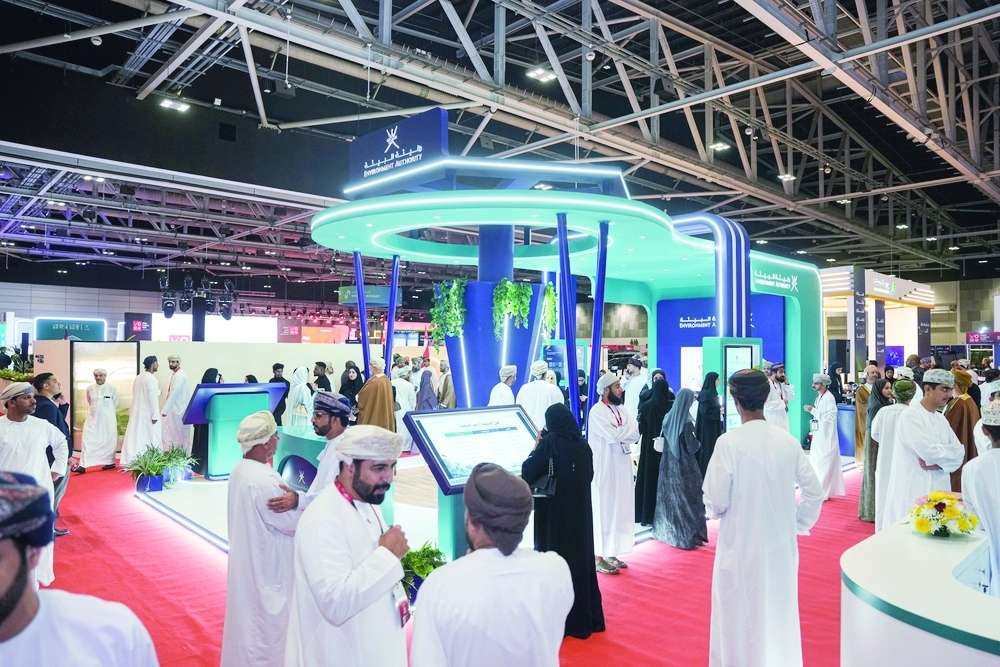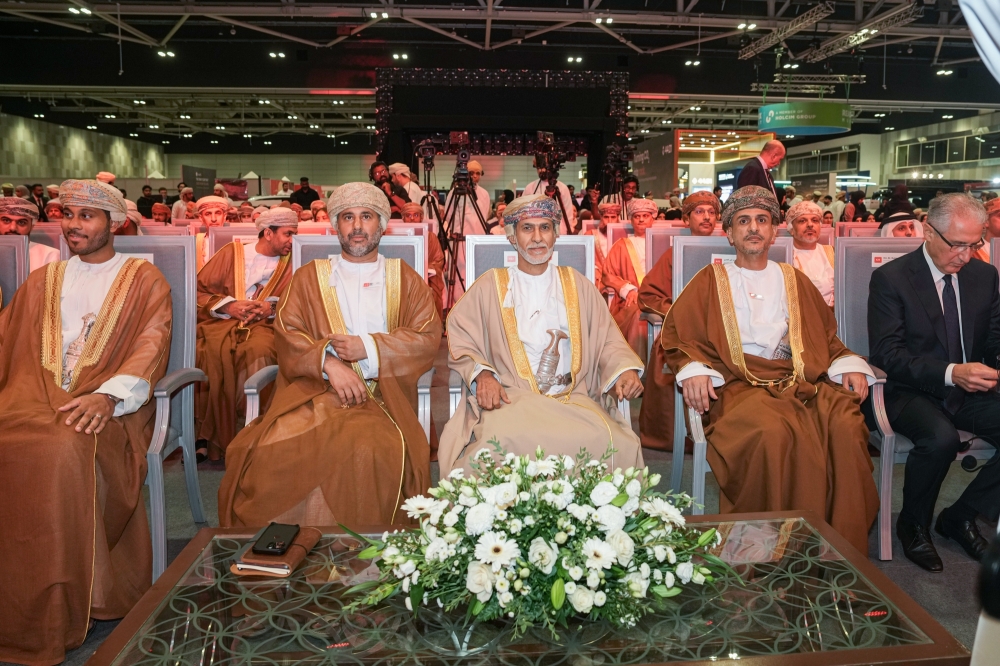





With broad international participation, the experts at Oman Climate Week, hosted in Muscat from September 14 to 16 at the Oman Convention and Exhibition Centre, have called to shift from ambition to implementation and accelerate climate action.
The second edition of Oman Climate Week is dynamic, with 400 speakers and over 5,000 participants for the conference, master classes, and workshops to be held in three days.
It features more than 20 training workshops, 80 environmental technology exhibitors, and over 15 events.
The Climate Week this year also includes the "Eco-thon" Challenge with 150 participants, the launch of a partnership to establish an Environmental Innovation Center, and the opening ceremony, which also saw the unveiling of the "Green Branch" Award.
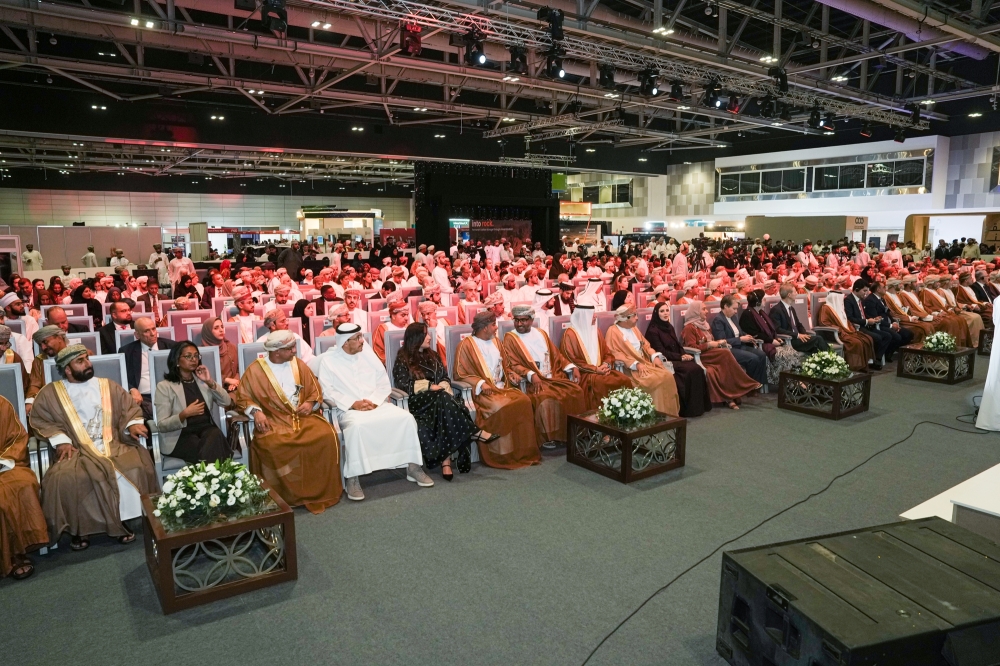
The event draws broad international and regional participation, bringing together decision-makers, experts, specialists, and representatives from government bodies, the private sector, international organizations, academia, research communities, and civil society.
The week is held under the patronage of Sheikh Al-Fadl bin Mohammed Al-Harthi, Secretary-General of the Council of Ministers, and is organized by the Environment Authority. With the participation of over 50 countries, it also includes a diverse program of panel discussions, specialized sessions, meetings, and interactive platforms addressing issues such as climate, energy, the circular economy, finance, innovation, resilience, and nature-based solutions.
The President of the Environment Authority, Dr Abdullah al Amri, said the organization of this week aligns with Oman’s development trajectory.
To strengthen national and international partnerships in climate action, support innovation and practical solutions, and facilitate the exchange of knowledge and expertise—all in alignment with the goals of Oman Vision 2040 and the national drive to achieve net-zero carbon emissions by 2050.
He said, "Environmental sustainability lies at the heart of Oman’s development path."
Dr Abdullah al Amri stated that the Sultanate of Oman views environmental sustainability as a pivotal element of its development path, noting that the Sultanate is moving towards achieving net-zero emissions by 2050 through an orderly and realistic transition. This approach balances national priorities, economic competitiveness, and energy security while boosting investment in low-carbon technologies and solutions.
He further highlighted that Oman has already begun translating climate-related opportunities into practical initiatives—such as carbon projects, nature-based solutions, mangrove cultivation, and increased investment in nature reserves and ecotourism—alongside supporting the circular economy, developing waste management systems, and harnessing the economic and environmental value of waste.
He also highlighted the Sultanate of Oman’s launch of its updated carbon neutrality strategy and a new national framework for the carbon market, alongside the continued development of green hydrogen projects and the "Blue Carbon" program aimed at restoring coastal ecosystems.
As a highlight of the Gulf dimension on the Oman Climate Week Agenda, in a recorded address, Jasem Mohamed Albudaiwi, Secretary-General of the Gulf Cooperation Council (GCC), emphasized the significance of Oman hosting this event. He noted that climate change has transcended its environmental dimension to become an economic and developmental challenge, requiring a collective response and effective regional and international cooperation.
He highlighted the importance of balancing environmental protection with sustainable economic growth, enhancing resource efficiency, and strengthening adaptive capacity. He emphasized the GCC states' aspiration to leverage the week's proceedings to bolster Gulf and regional cooperation, exchange knowledge and expertise, and support solutions that address the region's developmental and environmental needs.
"We must shift from negotiating commitments to delivering results," urged Mukhtar Babayev, president of COP29 and representative of the President of the Republic of Azerbaijan for Climate Affairs. He underscored the importance of translating climate agreements and commitments into tangible results on the ground, noting that the world no longer views climate change as an isolated environmental issue.
He said a wide range of risks, including climate change, natural disasters, water scarcity, land degradation, wildfires, threats to public health, and technological and industrial hazards, alongside conflicts and geopolitical instability.
He noted that climate change acts as a risk multiplier across these areas, emphasizing that drought is no longer merely a lack of rainfall when it impacts food production, electricity generation, migration, and livelihoods; similarly, the effects of floods extend beyond immediate damage to impact infrastructure, supply chains, and public health.
Regarding the global energy transition, Babayev emphasized the need for the shift to be just, orderly, and equitable, taking into account varying national circumstances and starting points; he noted that energy security, affordability, industrial development, and job creation are critical considerations in this transition process.
He also highlighted key outcomes of the COP29 conference in Baku, including the agreement on a new climate finance goal to provide at least $300 billion annually by 2035, alongside a pathway to increase climate finance from all public and private sources to $1.3 trillion annually by 2035.
He also highlighted the importance of making carbon markets under Article 6 of the Paris Agreement fully operational, as well as operationalizing the new Loss and Damage Fund.
He emphasized that these achievements only hold true value when they bring about tangible change on the ground, calling for a shift from negotiating commitments to delivering results.
He commended the role the Sultanate of Oman can play in international climate dialogue, drawing on its strategic location, economic significance in the energy sector, and diplomatic legacy—alongside its drive for economic diversification. These factors position Oman to bridge differing viewpoints and manage the transition while maintaining stability and development.
Oman Observer is now on the WhatsApp channel. Click here